Showing posts with label Movies. Show all posts

Monday, December 31, 2012

My Favorite Films of 2012


2012 has been a very good year for movies. Box office has been up. More people are going to the movies again. Even the worst films of this year weren't as bad as the worst films of the past couple years. Of course, no one can tell how this year will hold up and be evaluated by future generations of critics, but in the here and now, I’d say 2012 was a special year in movies.

This is odd for me to say since I haven’t been writing about movies much since October. If movies have been so good, why haven’t I been writing more about them? Well, it’s been hard to find the words as of late. Writing about movies is something that pretty much anyone can do (of course, quality will vary dramatically), and the Internet has turned everyone into wannabe Roger Eberts, Gene Shalits, Pauline Kaels, and Rex Reeds. Unfortunately, most of what I read is similar to most of what I write: bi-polar, thumbs-up-thumbs-down, hyperbolic advertising. Only a handful of critics out there seem to understand that film criticism is more than just a Consumer Reports article that can be easily translated into a number on Rotten Tomatoes or Metacritic. And don’t get me wrong, I’m not trying to bash Internet critics, or make it seem like there’s nothing positive about blogging.

I just feel like I've got nothing to say.

I've got nothing to say that hasn't already been said, and probably better. Take my review of Cabin in the Woods. I loved the film, and called it genre-defining and revolutionary. Well, so did pretty much everyone else who liked the movie. I could have written a review of Argo, but it would have amounted pretty much to “Ben Affleck's film is an edge of your seat thriller, and his direction and command of tone have put him on the map as one of America’s premiere filmmakers.” That was said by a large number of critics across the country.

So, I’m not writing much anymore until I feel like I've found a way to write about movies that feels fresh, at least to me.

In the meantime, I can’t resist the temptation to write my annual list of favorite movies. I say this is my list of favorites because you can’t argue with me over it. These are my favorites, and indicative more of my tastes and psychology than they are of actual merit or worth as a piece of film. A good list should reflect the list maker, giving you a good idea of what makes him or her tick. It’s the easiest way to see a critic’s perspective of the world.

Unlike previous years, though, I’m putting this list in a non-alphabetical order. These are my favorites, and I liked #1 more than #10, but not by as much as you may think.

10. The Grey


It’s rare that a movie in January is on any “Best of” list, since January is typically the graveyard month for movies Hollywood wants to dump on an unsuspecting public as they push their Academy Award nominees at the box office. Yet, somehow, The Grey sneaked into theaters, received some critical acclaim, and was out just as quietly as it had come. And then a funny thing happened: it appeared on Netflix and suddenly people started talking about it. There wasn't a week in my life as a teacher that a student did not come to me and ask, “Hey, Dollins, you seen The Grey yet?” Usually, when teenagers start asking me if I’ve seen a movie, I cringe, only because they usually want me to watch garbage like Project X. But the follow-up question was usually something like, “What did you think of the ending?”

Well, the ending is the reason why The Grey is on my list. Without its remarkably effective ending, the film is a very good survival film featuring a fine performance by Liam Neeson. But with the ending, The Grey transcends its genre and becomes something resonant. It’s a movie not about survival so much as it is about finding the will to live, even in the worst of circumstances. That’s a pretty simple message, all told, but there’s something so visceral, powerful, and honest in Neeson's performance in those final frames, as he breaks bottles and creates a weapon to fight off the last of the wolves that have been hunting him. This is a man who starts off the film wanting to live for others – for the memory of his wife, for the crew of men that come to trust him – and finally decides that he wants to live for himself, on his own terms. It’s an existentialist drama that has aged well over the year, and looks to continue doing so.

9. The Perks of Being a Wallflower


As a child of the 90s, and as an outsider with a small, but great group of friends, The Perks of Being a Wallflower resonated with me in a way that many films haven’t. Some films hit us on a personal level, and they matter, whether they are quality films or not. Fortunately, Perks is a quality film. I knew I was in for a treat during an early scene at a Homecoming dance, when Charlie, our main character, is noticed being the titular wallflower by Sam (Emma Watson) and Patrick (Erza Miller). The use of Crowded House’s “Don’t Dream It’s Over”, combined with a beautiful tracking shot of the back of Charlie’s head as he enters the dance floor stunned me, recalling all the nerves and excitement that craving validation in high school brings. That the film combines a soundtrack featuring David Bowie and the Smiths, and confesses a love affair with The Rocky Horror Picture Show while simultaneously never wearing its 90s setting as wink-wink kitsch, only made me fall in love. This is the best film John Hughes never made.

8. The Master


Anyone who spoke to me, or read my review, knows how much this movie challenged me. Now that I’ve had a couple months to process P.T. Anderson’s latest, I realize that I was trying to apply traditional understanding of film to my criticism. The Master is not attempting to tell a traditional narrative. There’s a hint of a story, but its strength lies in its power of observation. Freddie Quell’s twisted, drunken state plays more as a symbol of what America was after WWII, while Lancaster Dodd is the healer, come down from his self-made mountain to provide the easy answers in the face of truth. Of course Dodd wants to control Freddie, wants to make him whole again, because it would validate his lie. Yet, Anderson’s film isn’t that simplistic. It’s also a lament of lost innocence, a dark love story, and about the nature of alcoholism. I don’t think I saw any other film this year as packed with ideas and metaphor, from the images of the waves to the brutal handjob delivered by Amy Adams’ taskmaster wife, Mrs. Dodd. The Master is a movie that I want to see again, multiple times, like a great novel: it’s challenging art, but worth the work to understand it.

7. Argo
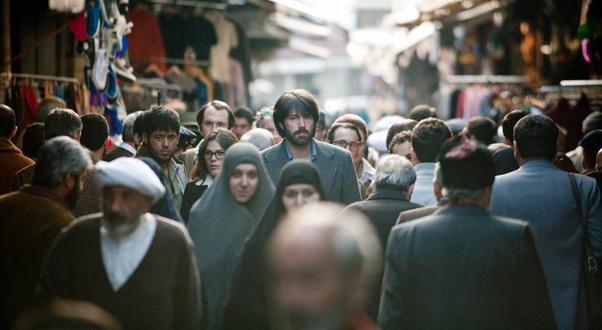


Can Ben Affleck get any cooler? When I first saw Gone Baby Gone, I was mesmerized that this guy who had only a few years earlier embarrassed comic book fans, like myself, by playing Daredevil, was able to make such an excellent film from behind the camera. When The Town happened, I was excited to see that he did it again, this time with even better source material. Argo is evidence that Affleck’s directorial voice is legitimate, strong, and influenced by great directors like Lumet and Coppola. Argo makes politics fun, as it combines the CIA world of the Iran Hostage Crisis with Hollywood in a story that is so odd that it absolutely has to be true. But this movie would not have worked if not for two things: 1) the great airport sequence and 2) the casting. The airport sequence is one of the most suspenseful moments in cinema this year, cranking up the tension in increments until the release is nearly orgasmic. The casting, though, makes the film, as Affleck and his team wisely dipped into the worlds of TV and motion pictures to find the right mix of players in Bryan Cranston, Alan Arkin, John Goodman, Kyle Chandler, and Victor Garber.

6. Beasts of the Southern Wild


Oh, Hushpuppy, how I just want to give you a big hug (which you would, no doubt, smack me upside the head for doing)! I loved Beasts for its passion and grit. Six-year old Quevanzhenne Wallis carries this movie on her tough shoulders and inspired me to fight for what I care about, even in the face of losing her father and her home. Her Hushpuppy is one of the great characters of cinema, and will no doubt be talked about for years to come. I had a chance to meet screenwriter Lucy Alibar earlier this year during a screening of the film in Palm Springs, and her earnestness about dealing with the death of her own father when she wrote the original play she adapted for the screen was heartwarming and valuable. It made this film all the more poignant, yet the furthest thing from sentimental. In any other year, this would probably have been my #1 film, but 2012 wasn’t any other year in film.

5. Life of Pi


This is a hard film for me to write about because it is too personal for me, yet I can’t ignore the hold that it had over me. I have spent the last few years of my life clinging to the title of “atheist,” mostly because I had spent 13 years of my life living a Christian lie, and hating myself for it. If religion – or any belief, really – is to play a huge role in our lives, it should fulfill us, give us strength, make us secure and whole. Christianity did not do this for me, but I stayed in the faith a long time, thinking the problem was in me. My rebellion a few years back was to take a complete 180 and return to the atheism of my father and my formative years when God was merely a concept my mother threw around when she was suffering. Life of Pi was a reminder to me that maybe there is indeed more to life than they way I’m living now, that maybe I’m more of a believer than I give myself credit for. In the beginning, a journalist approaches Pi and says, “I hear you can tell me a story that will make me believe in God,” and by the end, I found myself wanting to believe again. Not necessarily wanting to believe in the same way, but wanting to find the joy in the Sublime, the unexplainable, in the mystery of Life and the Universe. Life of Pi is great cinema – it’s a series of paintings telling an epic tale of a little boy lost, and of the power of tales to inspire us and help define this great and marvelous world. While I know some are angry with the ending, I think its ambiguity is what makes the film great – as with all things involving faith, we have to make a choice as to what we choose to believe, and that thing is our god.

4. Looper


There were two sci-fi films that dealt with this idea this year, Colin Trevorrow’s debut film Safety Not Guaranteed and Rian Johnson’s remarkable Looper. Both films capture the heart of time travel—the emotional ideas that compel a person to attempt it. Looper’s strength—and what makes it one of my favorite film’s of the year—is that it avoids explaining how time travel is possible, and thumbs its nose at all the paradoxes time travel stories inevitably create in an attempt to give us a beautiful love story and a profound tale of self-discovery. This is a consuming drama about a hitman forced to track down his future self to “close the loop” on his life, and the consequences this has in the present. Joseph Gordon-Levitt’s performance is outstanding, and Emily Blunt’s character is one of the most compelling female characters on screen this year, even when you consider the great work from Amy Adams, Jessica Chastain, and Jennifer Lawrence.

3. Moonrise Kingdom


Thank you, Wes Anderson, for writing this year’s greatest romance. The story of Sam and Suzi, two preteens in the mid-60s who find each other and run away together, is beautiful, subtle, funny, and charming. No film this year brought a bigger smile to my face, or warmed my heart more. I know how silly that sounds in our cynical day and age, but I want the movies to make me feel something. Moonrise Kingdom transported me to an enchanting island village where a down-on-his-luck cop, an overzealous Scoutmaster, lawyer parents, and the coolest group of kids since The Goonies made me want to grab my binoculars, a record player, and a cache of children’s books and move in.

2. The Cabin in the Woods


One of the year’s most polarizing films, for sure. I’ve had any number of people talk to me about how much they hated it, especially the mythologically epic finale; at the same time, I’ve had several discussions with people about how awesome and profound the film is, too. All I can say is that no other film this year got me to fork over money to see it three times theatrically, followed by a purchase of the Blu-ray and subsequent viewings. Cabin in the Woods does something no other horror film in recent memory has been able to do—dramatically represent the reason we watch horror films. It also serves as a strong response to anyone who wants to point fingers at violent movies—and especially horror films—as one of the reasons for societal violence, like what we recently saw in Oregon or Newtown. The reality is that we need these films to give us an outlet for the darkness that resides in our hearts and souls. Joss Whedon and Drew Goddard recognize this and made one of 2012’s most entertaining treatises on the subject.

1.       Django Unchained


Had Django been released earlier in the year, no doubt I would have gone to see it multiple times, just as I did Pulp Fiction back in 1994. These characters are the year’s most memorable, most exciting, and most iconic. Tarantino has made a career on creating iconic characters, from Mr. Blonde to Vincent Vega to the Bride to Hans Landa, and with Django Unchained he reaches into spaghetti westerns, German mythology, and the darkest corners of American history to create a new American mythology. Much is being talked about the shocking violence, use of racial epithets, and historical accuracy, but Django Unchained cannot be reduced to such simple debates. Like Tarantino’s best work, it redefines archetypes and reveals some deep truths about our America, past and present.

Wednesday, September 19, 2012

Let This One Sink In -- Reflections on 'The Master' (2012)


As I was waiting to behold the 70mm screening of The Master at Hollywood’s Cinerama Dome, the previous screening exited and something I’ve never seen at a movie screening happened. The first two people out the door burst into the warm night air, held up their middle fingers, and shouted “This film fucking sucks! You’ve wasted your money!”

What a way to prepare to see a new movie, right?

A bit unnerved, I entered the Cinerama Dome for the first time, was excited and overwhelmed by its massive interior and unique history. After all, 2001 premiered there in 70mm back in ’68. But soon enough, I was caught up in a conversation with another filmgoer. He had already seen The Master twice, and was back for a third go around. “It’s awesome,” he exclaimed with a giddy smile stretching over his face. “One of the best films I’ve ever seen.”

I relaxed a bit, hoping I’d see things more his way. Yet, I kept thinking of the volcanic reaction of the people outside. Suffice to say, I was nervous. I shouldn’t have been, of course. This is, after all, just a movie; some people love a film, some people hate it. So what?

But this isn’t just any film. This is The Master, the new film from Paul Thomas Anderson, whose work matters. A new geeky superhero film? Whatever. There are some filmmakers you have higher hopes for, whose perspective in their art is more than just beautiful commercialism. Anderson is an Artist, with a capital ‘A,’ like Scorsese, Tarantino, Godard, Kurosawa, Coppola, and Hitchcock. His films matter. Boogie Nights, Magnolia, There Will Be Blood – these films changed the way I watched film. He is a true auteur, and since he doesn’t make many films (6 films in 17 years), a new work from him is something special. So, I was nervous and conflicted. I had been waiting for this movie for over a year and a half, since I first heard about it; it wasn’t allowed to suck. So that vitriolic review outside stuck with me, like the leftovers of a nightmare.

Then the movie started, I settled in. I let it wash over me like the ocean imagery that serves as the film’s defining motif.

The Master is a singularly frustrating film, one of the few that I left the theater uncertain of my opinion. It is a well-acted, beautifully shot film with a hypnotic score and pace, yet its narrative seems unfulfilling; it comes to a resolution that is both perplexing and initially underwhelming. And while I left the theater feeling disappointment and confusion, I ultimately felt as if I had seen something great that I couldn’t quite understand. I felt guilty, as if there was something wrong with me for not loving it.

The film tells the story of impulsive powder keg, Freddie Quell (Joaquin Phoenix in what will be his career defining performance), who is a WWII vet that comes back from the war a damaged vagabond. He is an alcoholic who specializes in mixing potent moonshine, and manages to get himself in trouble everywhere he goes. This penchant for making trouble eventually leads him to stow away on a ship hosting a party that happens to be setting sail for New York City.

The ship is mastered by the film’s title character, Lancaster Dodd (Phillip Seymour Hoffman, who gives the best performance of his incredible career). Dodd’s first appearance is spell-binding. “Who are you?” Freddie asks him, hung over from the night before. “I am a writer, a doctor, a nuclear physicist, a theoretical philosopher. But above all, I am a man – a hopelessly inquisitive man, just like you.” Dodd, we learn, is the founder and leader of a religious cult called ‘The Cause.’ It is reminiscent of Scientology, L. Ron Hubbard’s pseudo-scientific religion that was started around the time this film is set, the early 1950s. Dodd is a remarkably charismatic man, who dominates a room with his personality, has a boisterous sense of humor, yet can be aloof and hot-tempered.

Freddie and Dodd form an immediate bond, at first because of Freddie’s desirable moonshine (made with paint thinner), but eventually because each man seems to find something irresistible in the other. Part of the film’s frustration emerges from not being able to put your finger on exactly what this is. Does Dodd want Freddie around because he can control him? Perhaps. Or, is it because he feels that by ‘processing’ Freddie using his faith’s indoctrination system, he can somehow control the savagery within himself? And what about Freddie? Is he hanging around with Dodd because he needs a father figure to help him find meaning in this suddenly meaningless world? Maybe it’s because being involved with The Cause is the only place he is accepted. Another idea is that these men are in love with each other. Watching the way they light up cigarettes after Freddie’s first processing session has the same vibe as two lovers in a post-coital smoke.

Paul Thomas Anderson is smart never to fully define the relationship, and allows his other characters to comment on it, revealing different elements. Most notably, we have Peggy Dodd (Amy Adams, adding to her exceptional resume after strong turns in Doubt and The Fighter), Lancaster’s pregnant wife, who is skeptical of Freddie’s place in their world. She keeps Lancaster in check, and in one fantastic scene, involving perhaps the coldest handjob in cinema history, Peggy makes it clear that she is having none of Freddie’s funny business without even mentioning his name. Besides Peggy, though, Dodd’s son, Val (Jesse Plemons) reveals to Freddie that his father isn’t necessarily on the level, and the rest of Dodd’s followers are in a mixed state of belief and loyalty.

I think those followers may be representative of the audience for this film. I know I was mixed in many ways initially. The film is at first gorgeous. Mihai Malaimare’s cinematography is stunning, the colors and textures popping off the screen, seemingly tangible. The compositions, as expected from Anderson, are complex, and will no doubt bring about a variety of new interpretations on future viewings. And Johnny Greenwood’s score is the best of the year – so hypnotic, so memorable; I can still hear the tick-tocking in my head as I write this. Technically, The Master is a win in every category. But on the narrative level, it is so challenging that it almost feels anti-climatic. The film’s emotional climax is slight, quiet, completely unexpected from two explosive characters. And the resolution is so strange as to invite many interpretations.

All this ambiguity was what bothered me as I left the theater that evening. And then a couple days later, it occurred to me that the ambiguity is exactly why this film is a masterpiece. Our relationships in life are defined in ambiguous terms, especially our deepest ones. Anderson’s film is savvy, not quick to give answers like so many other filmmakers. He allows us to see what we want in these characters. Is the relationship between Freddie and Dodd a father/son relationship in the same way the relationship between Dirk Diggler and Jack Horner was in Boogie Nights, or the way Daniel Plainview’s relationship with Eli Sunday was in There Will Be Blood? Maybe. You can certainly see it that way. But you can also see their relationship as romantic, too. Or you can see it as parasitic. It is all of these at different moments, because that is what relationships are – they are many things at different points in our lives. We have been conditioned by most films to expect dynamic characters who change and evolve. Anderson’s script gives us static characters who don’t change, yet whose very presence in each other’s lives reveals a variety of things about them. This film isn’t about change; it’s about revelation.

Maybe those people who left the Cinerama Dome that night, flipping off and cursing this beautiful film hadn’t yet processed this. Will they? I hope so. It took me a few days of thinking about the movie before I could figure out what I had just seen. How many movies demand this sort of thinking from us?

I’m glad I didn’t come to such an immediate bi-polar reaction. Paul Thomas Anderson deserves much better than that.

Sunday, September 2, 2012

Small Town Satire Poses Big Questions -- Reflections on "Bernie" (2012)

How 'bout some bubble bath and cupcakes before I kill you?

One of the great short stories ever written about the South was Faulkner’s “A Rose for Emily,” about a hermit-like small town girl whose death brings all of the townsfolk down to her home to talk about the mystery surrounding her abrupt demise. The entire story is told through the collective lens of the townspeople and their gossip – perhaps making them the least reliable narrators ever. But what the story did was capture the familiar feeling of the small town, the “everybody being in everybody’s business” mindset, and the unified sameness of the group as a whole.

Richard Linklater’s 14 years in the making film, Bernie, goes for a similar theme, and while it may not achieve the genius of Faulkner’s tale, it is quite effective as both a satire and a social commentary. Linklater’s resume is populated with several films dealing with community, from the rightfully unfocused Slacker to the rambunctious Dazed & Confused, to the sweet-tempered School of Rock, but none of them do more than celebrate their communities for their idiosyncrasies. Bernie is a dark comedy that reveals the hypocritical underbelly of our otherwise nostalgic feelings about small town life. As with most excellent satires, it also holds a mirror for us to take a closer look at our own prejudices and assumptions.

Bernie is based on a true story about Bernie Tiede (Jack Black), a small town assistant funeral director who murdered the wealthiest – and meanest – woman in Carthage, Texas, Marjorie Nugent (Shirley MacLaine). We learn Bernie’s story through the tales of Carthage’s gossips, who paint Bernie as a sweet, loving, generous man – the sort of man they are unwilling to believe could murder someone in cold blood, even though Bernie confessed to the crime. They tell us how Bernie met Marjorie through the funeral for her late husband, and how they became companions. There is tons of speculation on the nature of their relationship, and Bernie’s motivation for killing Marjorie, but the end result is the same: either Bernie didn’t do it, or Marjorie deserved it.

Linklater’s best decision here as a filmmaker is not showing us either Bernie’s or Marjorie’s side of the story. This forces us to make up our own mind as an audience. Are we okay with murder, if the murderer is a kind, god-fearing man who seems to have made a mistake in the heat of passion, and the victim is a cruel, insufferable, bitchy racist who is despised even by her own family? Does context every justify a crime? Are we okay with allowing a killer to walk free just because we like him? By never giving us Bernie’s perspective, we are left to trust the – possibly – untrustworthy opinions of Carthage gossips. And they are quite a good group of people. They are convincing enough that they even make the story’s hero, District Attorney Danny Buck (Matthew McConaughey), look like an incompetent jerk who just can’t see the truth that’s right before his eyes.

As a satire, Bernie hits all the right marks, giving us insight into the workings of a small town, and ultimately into the workings of America. Bernie was not just a good man, but an incredibly generous one; he used Marjorie’s wealth to help everyone in need – local businesses, the church, families. Is that how we are as Americans – completely okay with letting others do wrong so long as our lives are moderately prosperous and comfortable? What’s the end result of being so complacent? The story of Bernie Tiede, and the reaction of Carthage’s people, spotlights our own complacency and unwillingness to see the motives of others. Just because your heart is in the right place doesn’t make your actions any more acceptable.

This film seems slight because the scope of its subject matter, and presentation of its narrative is so limited in scope, but when you contemplate the implications of its resolution, you may find yourself with a lot to consider about the state of affairs, not just in America, or the world, but in your own life.

Tuesday, March 20, 2012

On Misogyny and "The Girl with the Dragon Tattoo"


Recently, I read Marie Haws’ enlightening essay about the brilliance of Mary Harron’s adaptation of American Psycho. While the essay has some strong ideas about Harron’s female perspective and its ability to deconstruct the male ego at the heart of Bret Easton Ellis’ satire, she made one statement which really rubbed me the wrong way:

I still remember how peeved I was when I saw the teaser poster for David Fincher's "The Girl with the Dragon Tattoo." It amounts to the sexualization of a rape victim. And then later on, I heard about the changes he'd made to Salander's character - softening her appearance somewhat to make her more attractive, while modifying the relationship with Blomkvist so as to make it less threatening to men. WTF?
Not that I was surprised. It's par for the course. Like "Drive" with Ryan Gosling - it's ultimately about what men want to see - even if it means having to regurgitate then eat what's come before to maintain an illusion of political correctness, while being just as clueless about itself as the genre it’s a homage to.

Using the texting term “WTF” in an essay aside (oh, man did the English teacher in me cringe at that), I was very disappointed that such a progressive opinion about a film like American Psycho would lead to such a short-sighted opinion about The Girl with the Dragon Tattoo and Drive. To suggest that these two films are “clueless,” and that David Fincher softened Lizbeth Salander to make her more attractive and politically correct is narrow and, frankly, wrong.

I don’t want to focus on Drive here, mainly because the two films Ms. Haws sites are vastly different types of films with vastly different agendas. Since she focuses mostly on The Girl with the Dragon Tattoo, and uses Drive as a supplementary example, I’ll stick to Fincher’s film. She is essentially accusing it of being misogynistic, an attitude that has been expressed by several other critics in their reviews of the film. Dragon Tattoo is far from a misogynistic work.

Before I break this down, I have to make one thing clear: I am a man. I know, my name is really ambiguous, but I do, indeed, have a penis, and it says “male” on my driver’s license. This needs to be mentioned, though, for the simple fact that I’m a part of the audience Ms. Haws says the film is being “softened” for. The suggestion is that men, in general, are threatened by aggressive female characters, so they have to be reduced in some way by filmmakers in order to make men feel more comfortable in the theater. After all, we have to maintain our perceived gender superiority, right?

The problem with being male and writing a defense of David Fincher’s adaptation of Stieg Larsson’s novel is that my opinion on what is and isn’t misogynistic can easily be dismissed. After all, the movie is made for people like me, so, of course I’m going to find nothing wrong with it. That sort of ad hominem drivel is silly, though. Anyone who has read this blog knows that I am frequently critical of the rampant misogyny in romantic comedies, which I feel prey on the stereotypes of romance-seeking women and ultimately view them as foolish, shallow creatures. I can’t stand stereotypical women in film, and want more aggressive female characters.

Lizbeth Salander is this type of character. And even more important than being aggressive, which is satisfying in and of itself, she is complex. Complex female characters are even rarer than aggressive ones, especially in male dominated films like Dragon Tattoo, and that should be celebrated. I think a lot of critics were challenged by this, trying to define Lizbeth Salander as a rape victim who fights against victimization, but ultimately unable to reconcile the perceived contradiction of her attraction to Mikael Blomkvist (Daniel Craig). That’s the point Fincher’s trying to make about Lizbeth, though, that she is unable to be classified. Once you think you have her pegged, she takes an unexpected turn.

When we first encounter Lizbeth, we see her through the perspective of men. Her employer, Armansky, and an old school lawyer, Dirch Frode, ask for her report on Blomkvist. We see her through their eyes as a misanthropic punk, quiet, angry, but capable of doing quality investigative work. Armansky recognizes her skill, and by the end of the scene, Frode is asking for her opinion of the disgraced journalist she has been researching.

As Lizbeth is developed, we begin making assumptions about her lifestyle, only to have them subverted. Of course she lives alone, but she seems to prefer the company of women. She doesn’t have any family, but she is loyal to Homer Palmgren, a man we discover is her court appointed guardian. This must mean she is a poor ward of the court. But, then, how does a sullen, dark, lesbian, punk rock, chain smoking youth become a prized researcher for a high-end security firm? Fincher never really explains, allowing us to admire Lizbeth’s skill set as others seem to do while being less than appreciative of her social skills.

But then Palmgren is incapacitated by a stroke, and rendered incapable of tending to Lizbeth’s affairs. The autonomy she has valued since being assigned to him vanishes the moment she meets her new guardian, the loathsome Mr. Bjurman. The moment she arrives in his office is the first time Lizbeth is sexualized in the film, but we do not see her through his eyes. The scene is set up from her point-of-view, in which we recognize Bjurman as the disgusting lecher he is, using his power as her guardian to solicit sexual favors from her. Her sexuality is stolen from her in her initial scenes with him as she is turned into a victim. Bjurman looms over her in the framing, showing Lizbeth not so much as a victim, but as a woman who has suddenly found herself without the power to which she has become accustomed.

But as her scenes with Bjurman mount, Lizbeth becomes the power player, especially in the scene when she gets her revenge for being raped. Suddenly, she is the aggressor, using her sexuality as a weapon. Fincher allows this complexity, which is definitely offensive and frightening. We expect Lizbeth to get revenge – after all, she was wronged, and everyone believes rape is evil – but we do not expect her to get her revenge in such a sexual fashion. If anything, Fincher makes the connection in this scene between rape and power, revealing that rape is not about sex at all – sex is just the means to the end of obtaining power through forcing someone into submission. Lizbeth forces Bjurman into submission, rapes him with a dildo, them tattoos “rapist” on his chest, meanwhile blackmailing him with a video of the time he raped her. Not only does she become the power player here over a definite demon of a man, but she seems to get off on this. This may be the scariest element of the revenge scene; Fincher sexualizes her to show that she is enjoying revenge. That is not misogyny, it is complexity. There is a release to be had in revenge, which is why it is such a common human reaction.

But the biggest issue most of the critics, including Ms. Haws, seem to have with Dragon Tattoo is Lizbeth’s relationship with Mikael Blomkvist. The general feeling is one of frustration over the fact that such a proud character who seems to hate men could fall in love and become hurt when he betrays her at the end by maintaining an open relationship with another woman. I agree that if we take a simple interpretation, this is as shallow as the third act marriage between Dejas Thoris and John Carter in John Carter, but Fincher’s story earns the ending, because it reveals Lizbeth’s development as a character.

Part of what defines Lizbeth Salander is her inability to trust anyone, especially men. She keeps everyone at arm’s length: her employer, her guardian, her hacker friends, and her lovers. Initially she tries to do this to Blomkvist – after all, he’s just a man whose computer she hacked, and whom she followed to file a report as part of a job – but Blomkvist challenges her by approaching her on her own turf. In the scene in which they first meet, Blomkvist comes to her, and Fincher’s composition of the shots in this scene reveal them as equals. It’s important that the scene is shown from Blomkvist’s perspective because it makes it clear that Blomkvist has the same view; he does not see himself as superior to Lizbeth. Like the other quality men in her life, he does not judge her and values her for her abilities. Over time, he comes to value her company, too.

As their relationship progresses, Lizbeth and Blomkvist become lovers and friends. This doesn’t seem to trouble many people – it’s a typical beat in these sorts of stories. What bothers people, though, is that Lizbeth develops an attachment to Blomkvist that she intends to pursue as a long term relationship. Again, Fincher allows Lizbeth the freedom to go where her character’s journey takes her. Falling in love with Blomkvist is a definite left turn because it defies everything we know about Lizbeth. She is not the sort of fall in love. She doesn’t trust men. She is autonomous. But through her feelings for her guardian, we discover that she is a woman searching for connection, if on her own terms. She finds this in Mikael Blomkvist, and this is one of the story’s greatest revelations.

Lizbeth doesn’t have to be the victim. She can own her sexuality, find passion in pain, and choose to fall in love if the person she desires is worthy of her love. This is a complex character, and the only reason why the movie succeeds. Fincher may show her through the male lens because Lizbeth lives in a male world, but she is always her own woman, making her own decisions, even if those decisions ultimately turn out to be conventional ones. Her ultimate triumph as a character is not getting revenge for being wronged, but for learning how to trust and love a person. That’s a powerful message, not a detrimental one.

Ms. Haws says that all this is done to make Lizbeth less threatening. I’d say the opposite holds true. What is scarier to a man than a woman who loves and trusts him? Giving love and trust is relinquishing power, and that sort of sacrifice is not to be taken lightly. The tragedy of The Girl with the Dragon Tattoo is that Blomkvist is so self-centered that he does not recognize how far Lizbeth has come as a human being, not just as a woman. His perception of women may be progressive as far as most men are concerned, but his attitudes are too cavalier and insensitive, which leads to Lizbeth’s inevitable heartbreak.

Now, had Blomkvist understood her, and had they ended the film in a loving embrace, would the critics be sated? Is it the fact that the plot is cruel and destroys Lizbeth’s newfound trust that is where the misogyny comes from? I’m not sure. I find the irony of the ending to be one of the best parts of the film. Lizbeth’s initial perspectives are confirmed, making her harder, and perhaps more dangerous. This experience will sharpen her, making her even more formidable and challenging a character. That’s how female characters should be treated in films – they should be afforded the respect of formative experience, for good or bad.

Is The Girl with the Dragon Tattoo misogynistic? Absolutely not. It’s a powerful film about the progression of a complicated woman who stands on her own as a person in an awful world that is full of misogynists. That’s a huge difference. Fincher’s lens is every bit as important to building up the female ego as Mary Harron’s lens was for breaking down the male in American Psycho. Before making an offhand comparison between the two in her essay, I wish Ms. Haws would have thought twice about this.

Sunday, March 18, 2012

A Hysterical Subversion -- Reflections on "21 Jump Street" (2012)

Sooo, that's how they get the doves to come out of the car?

Our appreciation of a movie is often based on its use of conventions, the specific practices that we often associate with certain genres. I like to call them expectations. When the use of conventions in a movie feels too obvious, too similar to other films, the movie is typically seen as a piece of crap, unworthy of mention, or simply forgettable. But, when a movie takes our expectations and twists them, manipulates them, or even defies them, the movie becomes engrossing and memorable.

Few genres are as defined by convention as the “buddy cop/odd couple” genre. The recipe is simple: take two characters who are polar opposites and throw them into a situation where they must rely on each other. Roger Ebert refers to them as “Wunza” movies, as in “One’s a rebel, one’s a by-the-book vet.” We expect car chases, gun fights, moments of male bonding, and moments of bickering in which the cops seem more like a married couple than co-workers. It’s been a very effective genre over the years, with movies like 48 Hrs., Beverly Hills Cop, Lethal Weapon, Men in Black, Rush Hour, Se7en, and Training Day all box office successes.

Early in 21 Jump Street, I realized I was in for a different take on the genre. Our bumbling heroes, Schmidt (Jonah Hill) and Jenko (Channing Tatum) receive a new assignment from their Captain (Nick Offerman). Due to their on-the-job incompetence – Jenko’s inability to remember the Miranda rights during an arrest – the duo is assigned to an undercover unit. As the Captain explains their assignment, he adds, “We’re reviving a cancelled undercover program from the 80s” and proceeds to explain how the powers that be prefer to recycle old projects due to a lack of originality. The metafictional vibe set by the scene immediately announced that everyone involved with this project was not only quite aware how absurd it was to make a movie based on a generic 80s TV show (notable only because it was the launch pad for Johnny Depp’s career), but excited by the opportunity to subvert everyone’s expectations.

Their excitement is contagious, making 21 Jump Street an outrageous, edgy comedy.

We first encounter Schmidt and Jenko in a flashback to 2005, when they were in high school together. Both play definite stereotypes – Schmidt the geek and Jenko the dumb jock – yet both are spurned by the institution of high school. While the flashback itself was a fairly typical starting point for a movie like this, the way its events are played out as the story progresses is pretty effective, especially for Tatum’s character. After this, we flashforward to the present and discover how these two completely different guys become partners and friends as they train to be cops. Then the plot brings them to 21 Jump Street and Ice Cube’s Captain Dickson.

That’s where the clichés end. From there we enter unchartered territory as the film brings Schmidt and Jenko to Sagan High to bust a drug ring, where they discover that the social order of high schools has changed dramatically over the course of the last seven years. Suddenly, the popular kids aren’t stupid, but intelligent, college bound, and involved. The film gets tons of mileage out of this as Schimdt and Jenko navigate the new landscape. And in the movie’s best twist, Jenko’s stupidity leads to him getting his undercover identity mixed up with Schmidt’s, suddenly putting him in the honors classes, while Schmidt gets to slum it in the drama and gym classes. This twist allows Tatum to shine, showing that he has a gift for comedy that he has not been allowed to display in his previous beefcake roles.

Time and again, 21 Jump Street defies expectations. It injects the buddy-cop formula with new life by taking old conventions and screwing with them mercilessly, from traditional character arcs to chase scenes to shoot outs. Even the expected cameos from the actors in the original series (Holly Robinson, Peter DeLuise, and Johnny Depp himself) are inserted in unique and unexpected ways. Anyone looking for a crash course on how to subvert and exceed audience expectations needs to take a long look – after coming down from the hysterical laughter – at 21 Jump Street.

Tuesday, March 13, 2012

A Little Less Conversation -- Reflections on "A Dangerous Method" (2011)

No kissing! More talking!
One of the most challenging things to do in a movie is shoot a really good dialogue-heavy scene. Even if the dialogue is interesting, often watching two characters talk to each other is the cinematic equivalent of watching a round of golf on a Sunday afternoon. It is not as simple as putting two characters on a set, pointing the camera and shouting “Action!” Movies are predominantly an action-driven medium – we expect to see things happen on the screen, after all – and characters talking isn’t very action-oriented.

David Cronenberg, one of the great directors, took on an incredible task in directing A Dangerous Method. The film, based on the play A Talking Cure, by John Kerr, is very dialogue laden. Characters’ discourses often span across multiple scenes, through the use of letters, and involve very academic dialogue. As a result, the movie often feels like a real drag. Yet, Cronenberg’s cast is more than up for the challenge, and despite some dull moments, A Dangerous Method is a riveting film.

The story centers on the relationship between Carl Jung (Michael Fassbender) and Sigmund Freud (Viggo Mortensen). Their relationship, both personal and professional, represented the two major views of early modern psychological theory. Jung finds himself enamored of Freud’s practice of psychoanalysis and applies it to the therapy of a new patient, the wild and disturbed Sabina Spielrein (Keira Knightley). The method works, but it opens the door to a passionate sexual affair between Jung and Sabina, forcing Jung to question himself, his ideas, and his theories about the purposes of psychology.

The film’s greatest asset is Fassbender, who plays Jung with a restrained passion. His gestures and mannerisms reveal a man of great intellect who doesn’t understand how to deal with his own psychological issues. This irony brings him great turmoil as the story unfolds, and Fassbender handles the material without ever falling into the trap of melodrama or caricature. He is proving quickly to be one of the finest young actors on the scene today, as 2011 saw him in as varied roles as that of Magneto in X-Men: First Class and as a sex addict in Shame. While his role in this film isn’t as electrifying (or physically revealing) as his role was in Shame, his portrayal of Jung is far more subtle and nuanced. This is an actor to watch for in the coming years.

While Fassbender is excellent, Mortensen and Knightley are also quite good as well. This is almost expected of Mortensen, who is very choosy about which movies he wants to be in. A Dangerous Method is his third film with Cronenberg (the other two were Eastern Promises and A History of Violence), and it is proving to be a rewarding partnership. Mortensen sinks his teeth into the role of Sigmund Freud, and manages to find the ironies and contradictions in the man’s character while never devolving into classic stereotypes. Granted, his Freud is always sucking on a cigar and walking around in a cloud of smoke, but it serves more as a reminder of his own screwed up psychology than it does as a visual cue highlighting in gaudy lights that THIS IS SIGMUND FREUD! Knightley, often accused of not being much of an actress (despite an impressive performance in 2010’s Never Let Me Go), is terrific as Sabina, playing her disturbance and neuroses with a shame and horror instead of the go-for-the-gusto craziness others might attempt. Her progression as a character, from asylum-bound loon to respected researcher/psychiatrist is both believable and fascinating.

A Dangerous Method relies very heavily on its performances, and each delivers. And while I would have loved more action, I’m not sure this could have been possible. Cronenberg works hard to make 13-hour conversations great cinema, and while he’s not always effective at doing so, his efforts don’t go unnoticed or unappreciated. This is a solid movie, but if you’re expecting lots of stuff happening, this is not your cigar.

Friday, March 9, 2012

Promises, Promises -- Reflections on "John Carter" (2012)

"I don't think I belong here. I don't mean on Mars...I mean in this movie."

John Carter is being advertised as an epic action-adventure from one of Pixar’s most well-known directors. Translation: expect excitement, great visual effects, and one hell of an emotional story. Once I saw all these things in the trailers, I was sold. I went all in on John Carter.

I just wish the movie had gone all-in as well. John Carter is a well-crafted film with solid CGI work, but falls well short of the bar set by its advertising. For all of its excellent visuals and breathtaking moments, it is remarkably deficient in the one area I expected it to thrive in the most: the story. It is poorly cast, has a script in need of some major work, and seems more intent on setting up a film franchise than actually being a great stand-alone film.

After a riveting opening sequence in which we learn that there are two tribes on Mars (known by the locals as Barsoom) at war with each other, and a group of god-like beings have given the savage leader a weapon of mass destruction in order to take over the planet, we meet John Carter (Taylor Kitsch). Carter is a Civil War veteran who has acquired great wealth. After his mysterious death, he leaves his entire estate to his nephew, Edgar Rice Burroughs. Burroughs also inherits Carter’s journal, and because of his immense curiosity, decides to read it. From there the movie’s story unfolds. That so much of the film’s endgame hinges on Burroughs reading the journal immediately upon receiving it makes the framing device feel clunky and contrived by the end.

The journal chronicles Carter’s path to being magically transported to Barsoom, where he is taken in by a third tribe, called the Tharks. They have four arms, blue blood, and a hive mentality. The Tharks’ leader, Tars Tarkas (Willem Dafoe), takes an appreciation of Carter, whose displacement on Mars has given him Superman abilities to leap tall buildings in a single bound. Eventually their paths cross with a beautiful Princess, Dejah Thoris (Lynn Collins), who is running away after her father tries forcing her to marry the savage leader, Sab Than (Dominic West), in order to bring peace among the tribes. Dejah is also entranced by Carter, and offers to help him find his way back to Earth if he is willing to help her fight for her people’s freedom from tyranny.

Basically, John Carter is the traditional hero tale. No more, no less. He is reluctant, accepting, goes through trials, and follows the rest of the Joseph Campbell hero cycle. As a result, the story is dull, and has a real been-there-done-that vibe. I know some people will get mad at this statement, and tell me that the filmmakers were adapting an older text that was written before the Campbell theory was popularized by George Lucas. I guess that means I should be cutting director Andrew Stanton and his writing team some slack, but it’s important to note that while John Carter of Mars was written before Star Wars made the “hero cycle” all the rage, the movie John Carter is being released after years of other films have turned Campbell’s ideas into clichés. That may seem unfair, but works of art are the products of cultural context, which often determines their success or failure in the present. Maybe John Carter will one day be hailed as a masterpiece by future generations who see something we’re missing (although I doubt it), but in the present context it is a good looking film with tired ideas and clumsy execution.

This film would have benefited from a story that re-invented Edgar Rice Burrough’s pulp novels and strayed away from the traditional hero tropes. I understand why a passionate fandom would want a movie based on a favorite series of books to be true to the original text (I’m sure I’ll be recycling this sentence in one form or another when I review The Hunger Games in a couple weeks), but when a book is almost 100 years old, and not necessarily a “classic,” shouldn’t a filmmaker be entitled to a little artistic license? There should be a desire to separate the title from the pack of titles already out there, not make something that places it firmly in the middle of the pack.

Besides the general structure of the film, the casting is of great concern. Usually I don’t remark on these things in my reviews, because I don’t completely understand the complexities of casting a movie. What I do know, though, is that when an actor is cast, he or she should look the part, even if their talent isn’t enough to bring the total performance. That said, casting Taylor Kitsch as the titular hero was a bad idea. Simply put, he’s not heroic enough. Kitsch, who is an excellent young actor, comes from the James Dean/Marlon Brando school of brooding protagonists. He does not look the part of a hero, nor does he play the part particularly well, so as his star rises among the various Baroomian tribes it is hard to see what they are seeing in him, outside of his spectacular abilities. Also woefully miscast is Dominic West as the evil Sab Than. This could be because Sab Than is written as a muscle-bound lummox. West is miscast here because he is an actor that can express much more subtlety. His character’s broadness makes him seem out of place in a role that could have been played by any number of lesser actors. It was hard watching both of these actors, for whom I have respect for from the roles they defined on TV’s Friday Night Lights and The Wire, being misused.

There are things I enjoyed about John Carter, don’t misunderstand me. The design of its creatures is phenomenal, especially the Tharks, whose four-armed bodies and horned heads makes them look threatening, yet strangely welcoming. The movie also has a great sense of humor when it takes time to develop character relationships. I loved early scenes of Carter trying to figure out how to walk on the reduced gravity Martian landscape (although this handicap is quickly abandoned once the plot needs Carter to do something dramatic). And I absolutely loved Lynn Collins as the Dejah Thoris. She embodies strength, discipline, and sensitivity, making her a powerful female character. I wish the movie hadn’t reduced her to a stereotype in the third act, but Collins commands the screen better than anyone else on the cast. She is also one hell of a sexy woman; her eyes and cleavage manage to distract from most of the film’s weaker plot points during the languid middle.

A movie like John Carter is pretty easy pickings on the criticism front. Being a pre-summer blockbuster, and from Disney Studios, it has the makings of a film you can hate on. I don’t like the fact that I struggled with it, or that I had so much to criticize. Movies in this genre are among my favorites, and I wanted this one to join the group of great sci-fi/fantasy/action-adventure films. I wanted this one to fill my heart with joy as I watched a man explore Mars. I wanted it to ignite my passion for adventure and storytelling.

I wanted John Carter to live up to its promise.

Wednesday, March 7, 2012

Does Adam Sandler Deserve All the Hate? -- Reflections on "Jack and Jill" (2011) and "Bucky Larson: Born to Be a Star" (2011)

And someone thought this was a good idea...?
Recently, the Golden Raspberries, our annual celebration of all that is unholy in cinema, nominated Adam Sandler for an unprecedented 11 Razzies as producer, writer, and actor in two of last year’s worst received films: Bucky Larson: Born to Be a Star and Jack and Jill. Both films were nominated for Worst Film, Worst Ensemble, Worst Actor, Worst Director, and Worst Screenplay. Sandler himself received the dual honor of being nominated as both Worst Actor and Worst Actress for his performance as brother/sister twins in Jack and Jill. It’s obvious that both of these films are awful, but the question to be begged is “how awful?” and “does Adam Sandler deserve all the hate?”

Sunday, March 4, 2012

The Definition of Hit-and-Miss -- Reflections on "Wanderlust" (2012)

Teenage me fantasized about this...


When I was a teenager, I always thought I was born into the wrong generation. Having been raised on the music and romance of the 1960s, I truly believed the Beach Boys’ song, “I Just Wasn’t Made For These Times” was about me. I should have been a hippie, living in a community of loving people, enjoying life, and engaging in free love.

I was a teenager, though. I realize now all I really cared about was the concept of “free love.”

David Wain’s Wanderlust is a film that appealed to my inner teenager. I felt very giddy watching Paul Rudd and Jennifer Aniston enter the culture clash world of Elysium, a hippie commune in Georgia. The humor arising from this fish-out-of-water concept had me laughing hysterically for a good hour or so. But then something happened, a transition in tone, a lame plot twist, and I found myself groaning my way through the last half-hour. Wanderlust gets far more right than it does wrong, but it is the definition of a hit-and-miss movie.

Rudd and Aniston play George and Linda, two New Yorkers whose lives get turned upside-down when he loses his job, and she finds herself unable to sell a documentary about penguins with testicular cancer to HBO. They decide to relocate to Atlanta, where George’s obnoxious older brother, Rick (Ken Marino), runs a port-a-potty business. On the way to Rick’s, George and Linda decide to stop overnight to stay at a bed and breakfast, and discover it is a hippie commune. They meet a colorful cast of characters (played by a troupe of terrific character actors in Justin Theroux, Lauren Ambrose, Jo Lo Trugilo, Alan Alda, Malin Akerman, Kathryn Hahn, and Jordan Peele) who make them feel loved, special, and wanted. So, when things go bad at Rick’s, George decides he and Linda need to move in with the hippies.

Had the movie taken on the ambling structure of David Wain’s first feature, Wet Hot American Summer, Wanderlust would have become a fantastic slice-of-life film about hippie culture and the downfalls of modern living. Instead, Wain chose to apply the now patented Judd Apatow approach of attaching sentiment to the last act of the film. The result is an uneven movie that, while more marketable, is not as fulfilling as it could have been.

Despite the movie’s failings, it gets so many things right that I still recommend seeing it. Paul Rudd is simply outstanding as George, whose seemingly good decisions keep backfiring on him. Every moment he is on screen with Malin Akerman’s sexy Eva is a revelation of sexual tension and marital fears that lead to some huge laughs. One scene, in particular comes to mind: when Rudd tries to talk himself into having sex with Eva as he makes faces at himself in a bathroom mirror. The scene echoes the iconic ‘mirror’ scenes in Taxi Driver and Pulp Fiction, but to great comedic effect. Rudd nails it in a way no other comic actor working today could; his presence personifies sweetness and decency, which makes the ensuing raunch outrageously funny.

The ensemble cast also put their best flip-flops forward. Third act gaffe aside, Justin Theroux is terrific as the commune shaman, Seth. Alan Alda plays the aging patriarch, Carvin, as more than just an acid-fried joke. But I fell in love with Lauren Ambrose and Jordan Peele as Almond and Rodney, an interracial married hippie couple, pregnant with their first child. They radiate the joy and love Elysium is meant to symbolize, and their appearances throughout the movie remind us why George and Linda wanted to be there in the first place.

Wanderlust is a fun diversion that could have been something better, but needs to be appreciated for what it gets right. Not sure what teenage me would have said – he probably would have lamented the film’s lack of free love.

What I've Been Watching -- January/February 2012

Take Shelter (2011) dir.: Jeff Nichols ****

I don’t usually like to eat sour grapes and complain about Oscar snubs, but after seeing the remarkable Take Shelter, it is an absolute travesty (in movie world) that Michael Shannon did not receive a nomination for Best Actor at the 2012 Academy Awards. His performance as a man afraid he is on the brink of insanity, while also choosing to entertain that insanity is one of the most risky, challenging, and heartbreaking roles of 2011. It is a role of a lifetime for the excellent Shannon, who has shined in other roles (The Runaways, Boardwalk Empire), but steals the show here. Also great is Jessica Chastain, as the beleaguered wife. Chastain was in seven movies last year, and played such a great variety of roles so well that she has to be regarded as one of the hottest young actresses working today. Take Shelter is good enough that I now have to go back and reflect on my list of best films for 2011. It is a magnetic film, demanding your attention and your thoughts.

A Better Life (2011) dir.: Chris Weitz *** ½

Demian Bichir puts in an excellent performance as Carlos Galindo, a Mexican immigrant whose undocumented status puts him at a disadvantage when his work truck – his only source of income – is stolen. Carlos and his son go searching for the truck and discover the significance of their father-son bond in the face of the political and personal ramifications of illegal immigration. The film apes the structure of Vittorio deSica’s classic The Bicycle Thief, but director Chris Weitz gives A Better Life its own flavor in the details of life for an undocumented citizen in Los Angeles. Bichir’s performance never falls into sentimentality, and allows us to empathize with Carlos without crossing the line into pandering for pity. The film has a lot in common with another terrific film about the undocumented, 2007’s La Misma Luna (Under the Same Moon). In that film, a child crosses the border illegally to be reunited with his mother, who is working to send money home to Mexico. Both films are about the ties between parents and their children, and both capture the heart of immigration issue – it’s about people, not borders.

Beautiful Boy (2010) dir.: Shawn Ku ***

If you’re looking to be depressed for an evening, this is the movie for you. Michael Sheen and Maria Bello play a married couple on the cusp of divorce when their only child shoots up his college campus, killing 21, including himself. We follow the couple as they try to pick up the pieces and figure out how, and why, a tragedy this horrific could happen. Sheen and Bello carry the film with strong, measured performances. The camera work, which gives us a fly-on-the-wall vibe, is perfect for the material. Yet, the movie suffers from the fact that it just isn’t interesting enough to sustain its length. Subplots involving extended family, work relationships, and the exploitation of the media are overshadowed by the central performances. One of my friends suggested that it sounded like 100 minutes of falling action, and nothing could be more accurate. This is the sort of material that would have been better served as a short film, not a full-length feature.

Anonymous (2011) dir.: Roland Emmerich ** ½

Did Shakespeare write his own plays, or was he merely a front for someone else, someone more educated and erudite than the son of a glovemaker? I wasn’t annoyed by the thesis of this movie, which suggests that the real bard was none other than Edward de Vere (Rhys Ifans), the Earl of Oxford. I was annoyed by the fact that I thought of this movie as having a thesis statement. Roland Emmerich, notorious for big-budget special effect crap like Independence Day, The Day After Tomorrow, and 10,000 BC, has not made a film so much as written a term paper. It’s an entertaining term paper, as far as term papers can be entertaining, but it’s still a term paper and all that entails. The paper – I mean film – dresses up Shakespeare’s period as a time of class struggle, political intrigue, and incestuous romance, in which de Vere throws his family and fortune to the dogs just so he can write some inspired verse. Along the way he enlists the help of playwright Ben Jonson (Sebastian Armesto) to be his beard, but Jonson’s ethics and pride keep him from doing any such thing; this is not an issue for the smarmy, uneducated actor Will Shakespeare (Rafe Spall), though, who sees an opportunity to be awesome and takes it. While I wasn’t impressed with the film’s presentation overall, there were moments to be embraced. I was especially excited by the way Emmerich went to great lengths to show the culture of the Globe Theatre and how Shakespeare’s productions would have looked on stage. These scenes will be used by high school English teachers with geeky joy for years to come.

What’s Your Number? (2011) dir.: Mark Mylod *

Movies like this make me hate the human race. A self-described “jobless whore,” Ally Darling (Anna Faris) is a mouth breathing moron who is under the impression that she will never be happily married if she sleeps with 20 or more men. So, she desperately enlists the help of her jobless, womanizing neighbor (Chris Evans) to help her track down her former lovers so she can try to reconnect and get hitched. Suffice to say, if you don’t know how this story ends, this is a movie made for people of your IQ level. Plot holes and leaps in logic abound here, as is typical of modern rom-coms, but nothing inspired my hatred more than Anna Faris’ performance. The plot’s gimmick is misogynist enough, but the way Faris tries to play her role as a jaded New York type only enhances its woman-hating heart.